
*cue Fiddler on the Roof theme*
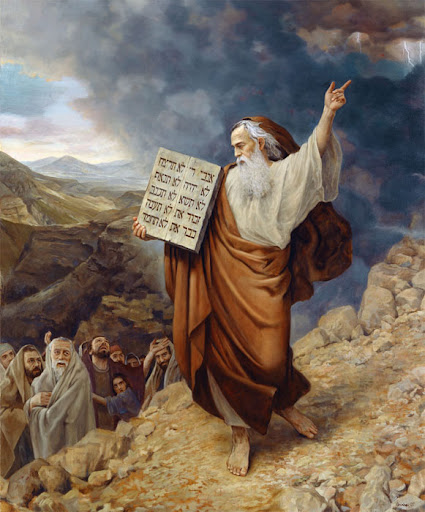
There seems to be a lot of people in the world today that don’t have a very good understanding of Catholic Tradition. Protestants accuse Catholics of “adding” to the Bible, making up more doctrines and justifying this by labeling them “Tradition”. The cultural change and rejection of authority in the 60’s has caused some people on the more progressive side to see changes being made to Catholic liturgical practice and make the assumption that the Church can change her teachings on faith and morals as well. And all this confusion stems from a poor understanding of the difference between two words, which are actually the same word, which is why it’s so confusing: Tradition, and tradition. So what is the difference between them, and why does it matter so much?
Capital “T” Tradition is also known as Sacred Tradition, or Apostolic Tradition. The Catechism tells us that “God graciously arranged that the things He had once revealed for the salvation of all peoples should remain in their entirety, throughout the ages, and be transmitted to all generations” (CCC 74). This Divine Revelation is known as the Deposit of Faith, and contains all of the Old Testament, plus all that Christ revealed to the Apostles, either by word or by deed. Some of the Revelation of Christ was later written down, by the Apostles or by those close to them, for the benefit of specific audiences and the whole Church. Before and after the 27 books of the New Testament (and numerous other writings) were recorded, the teachings of Christ were passed down orally by the Apostles and by their successors. This “living transmission, accomplished in the Holy Spirit, is called Tradition. … Through Tradition, the Church, in her doctrine, life, and worship, perpetuates and transmits to every generation all that she herself is, all that she believes” (CCC 78). The word “Tradition” comes from the Latin root “tradere”, meaning “to hand on”. Sacred Tradition, therefore, is the Word of God, revealed to the Apostles by Jesus, and handed on to those that succeeded them, either through written instruction or oral teaching.
Little “t” tradition, on the other hand, can refer to a whole host of other things. Pretty much every individual and organization, from families to large corporations, have their own traditions. In the context of the Church, however, the term refers to customs and practices which can be passed down from one generation to the next but which are not Divinely inspired. “Tradition is to be distinguished from the various theological, disciplinary, liturgical, or devotional traditions, born in the local churches over time. These are the particular forms, adapted to different places and times, in which the great Tradition is expressed” (CCC 83). These traditions can include things like prayers, liturgical customs, feast days, stories of saints, and many other things. A good example of the difference between big “T” and little “t” traditions is found in the Mass. The form of the Mass, the words that are said, and the materials used (the bread and the wine) come from big “T” Tradition. They have their origin in Sacred Scripture, and the details not found in Scripture have been passed down from the Apostles, and can be found in other early Church writings. The language the Mass is said in, however, is part of little “t” tradition. That is why it was able to be changed from Latin to the vernacular by the Council of Vatican II.
So why does all of this matter? The fundamental difference between the two types of tradition is that traditions created by mankind can change, while Tradition inspired by God will never change. The Catechism states that little “t” traditions “can be retained, modified, or even abandoned under the guidance of the Church’s Magisterium”. This Magisterium is the entirety of the bishops, including the Pope, who are the successors of the Apostles and are entrusted with the same task: to authentically interpret all of Divine Revelation and to pass it on to future generations. However, “this Magisterium is not superior to the Word of God, but is its servant. It teaches only what has been handed on to it…All that it proposes for belief as being divinely revealed is drawn from this single deposit of faith” (CCC 86). This means that in the entirety of her history, over 2000 years, the Church has not taught anything new in matters of faith and morals. Even in her Ecumenical Councils, when all the bishops gather together to debate doctrine, she can only authoritatively declare and define prior teachings in response to heresy.
Maybe you have been watching the news and are worried that the Church has changed her teachings. Maybe you have seen some changes occur that would fall under little “t” tradition, and assumed those changes were more significant than they really were. Maybe you hoped (with a large portion of society) for changes to Church teaching, not knowing that Church Tradition will never change. Maybe you’re reading this post just for fun and you don’t really worry about any of this. Whatever camp you fall into, and whatever your hopes and dreams are for the future of the Church, it’s important to understand the basics of Catholic Tradition, so that you are better equipped to deal with the confusing (and very often false) claims regarding Tradition and the future of Church teachings.
If you want to dive deeper into what the Catholic Church teaches on Tradition, I’d start by reading Article II of the Catechism (CCC 74-100). For more apologetics-related content, Catholic Answers has some great articles about Sacred Tradition, which can be found here, here, and here.
 Path to Happiness
Leave a comment